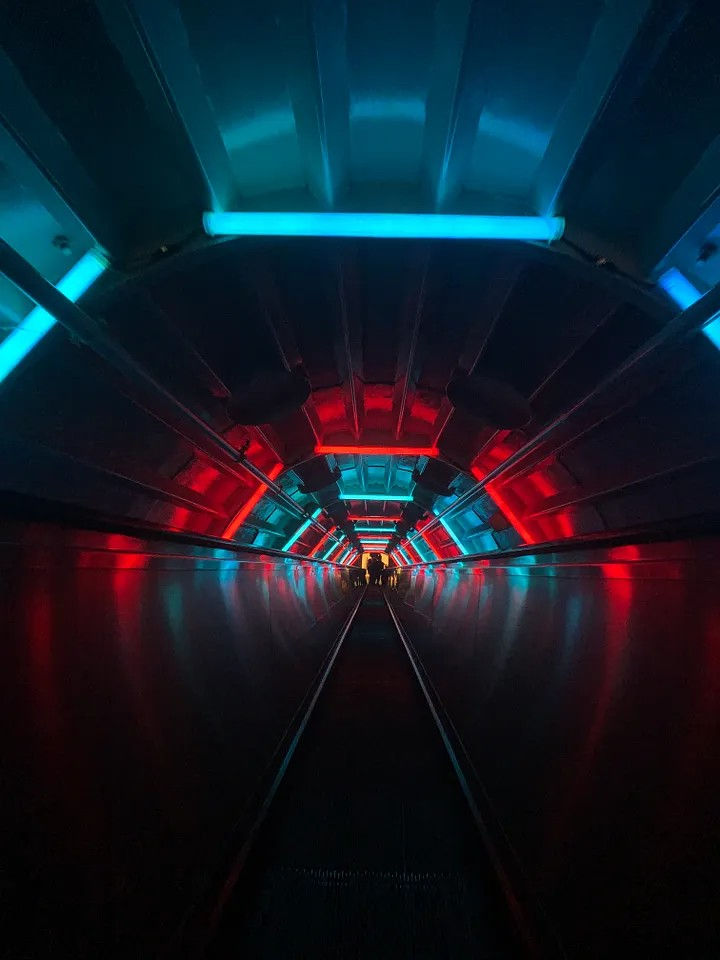
Viewing AWP2022 through a Warped Tunnel
by Mandira Pattnaik
Delighted that Butterfly Season is here already, and passionate patterned wings are circling pretty flowers. In clicking a photograph, I create a miniature that’ll capture the evanescent; simultaneously rescue me from my apocalyptic forebodings as the Russian invasion of Ukraine enters its 32nd day. Having convinced myself that I need to appreciate the now and today, and resume writing for any hope of seeing those pieces up in magazines based out of places I’ve never been, and will, in all probability, never be, I focus. How we give up on the what-could-be and settle on the what-is so much more as we age! I’d have revolted if someone told the teen-me to give-up on the what-could-be-s I’d saved for myself.
One of those what-could-be things for me would be formal creative training. I’m quickly told about writers numbering in hundreds across time and geography (including Wallace Stevens, insurance executive and Pulitzer winner, plus physician-writer William Carlos Williams) who were untrained and yet… More enlightenment: “It’s not the course, it’s the networking.” Okay. I wouldn’t know.
Just another what-could-be thing is AWP, the annual writer’s conference (at Philly, just concluded) the rest of the world only watches in envy. To me, as I keep tabs from thousands of miles away, it is a study of perfectly constructed miniatures: booths bubbling with energy and the vibrancy of book-lovers, the spirit of sharing art, the slightly flushed faces of first-timers, the discomfiture of debut authors and the audience members in fluorescent lighting — all in tiny snapshots uploaded and broadcasted. There’s a certain detachment that breeds quiet admiration when one is not in participation.
The closest we do to this sort of writer’s conference in India is the Jaipur Lit Festival or the Kolkata Book Fair. I hope they encourage active engagement particularly from younger people, though University literary magazines in India are unheard of. It’d be a shame if they only reaffirmed the existence of a niche circle of well-established order and institutionalized hierarchy. Particularly so because the Sanskrit word for literature, Sahitya, traces its roots to Sahit, meaning togetherness or companionship, pointing to a confluence or coming together of ideas. Creativity can only be sustained when we juggle different perspectives on culture and literature.
In this context, perhaps, no harm in secretly waiting for a disruption. Strangely like Thomas Doyle. Doyle, sculptor working with miniatures in a scale of 1:43, uses idyllic scenes that are disrupted and warped in some manner — for example, with a devastatingly large hole in the yard, or a buried house. The illusion of objectivity and sense of control that miniatures permit, is rudely broken. I hope the miniature literary scene in India is rocked, so more short-form fictions get published, new writers emerge, more readers are open to experimenting, and the number of literary magazines shoot past the dozen or so at present. I believe this is important to preserve the cartography of ideas, and to record the diversity of voices. The traditional publishing hotspots in the world seem to be succeeding in doing that, AWP included.
The high point for me this March was a generous invitation to AWP by a university literary magazine I’m contracted to be published in in the summer: “Hope you can drop by.” I see the way they offered me a chair on the table — a girl without MFA, non-native English, living in out-country India — as a recognition of the writing I do. Curiously, teen-me wouldn’t count this as a what-could-be!