Chudi, Chowder, Chimera — Flirting with Culture in Story-telling
- Sep 28, 2022
- 6 min read
by Mandira Pattnaik
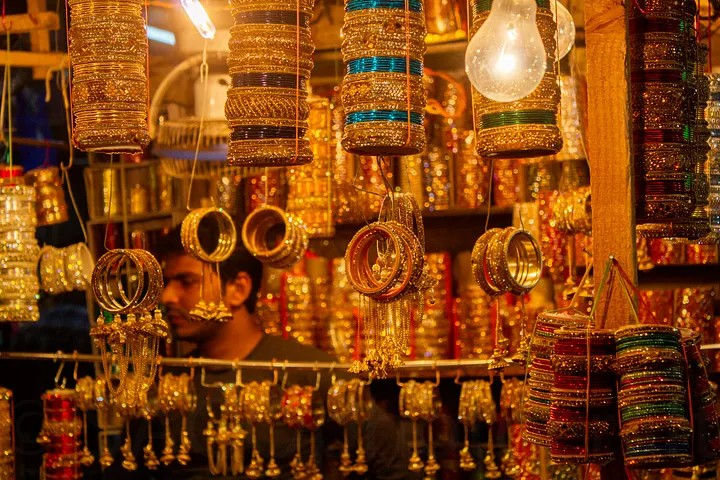
I trace my love for stories to a quiet childhood in a huge house, youngest member of an extended family, afternoons spent on a mango tree’s broad branch, and the embrace of a unique set of characters my mind bred to keep me company. Many years later, I believe that love got cemented with Arundhati Roy’s winning the Man Booker Prize for The God of Small Things (1997). As a student of economics at that time, Amartya Sen being conferred the Nobel Prize (1998) was an equally inspiring event. A threshold had been crossed; a boundary breached. It would usher in a young generation of economists and writers in English. Back then, in a country unsure of its global identity, oscillating between Shakespeare, Coleridge, Joyce, Kipling, and Hollywood movies, plus a good dose of literature in vernacular, it’d change the dynamics of publishing from that conjunction of culture and identity that has universal appeal.
Roy writes in her book: “…the secret of the Great Stories is that they have no secrets. The Great Stories are the ones you have heard and want to hear again. The ones you can enter anywhere and inhabit comfortably. They don’t deceive you with thrills and trick endings. They don’t surprise you with the unforeseen. They are as familiar as the house you live in. Or the smell of your lover’s skin. You know how they end, yet you listen as though you don’t. In the way that although you know that one day you will die, you live as though you won’t. In the Great Stories you know who lives, who dies, who finds love, who doesn’t. And yet you want to know again.
That is their mystery and their magic.”
I think these words attest to the euphoria of believing in human stories: stories about us, tales of place, memoirs of family, retellings of our past, our colonial history, and why we may write without pretensions and gigantic expectations. It pays to enjoy our writing as an immersive process, seamless towards the sharing of stories that are concealed under the fear of language or vocabulary. From a narrow, personal viewpoint, I also recognize that staying true to one’s interests and field of active societal participation demands a lot of honesty, to be truly relatable.
Now, it begs amused wonderous ponderings as to why would stories about Indians in India, told without coloration, interest someone abroad? Precisely what Roy thought, prior to her book deal, a question that she thinks also hinged on the fact that she was an Indian living in India, not Salman Rushdie or Vikram Seth, and not literature-educated (she studied architecture in college). But it happened! That’s how the reader relates to a sincere story — how in spite of a personal emptiness, one identifies with a character, provided that the character is honestly portrayed. Reviewing Roy’s book in The New York Times, Michiko Kakutani wrote: “Roy gives us a richly pictorial sense of [her] characters’ daily routines and habits, and she delineates their emotional lives with insight and panache, revealing the fatal confluence of jealousy, cruelty and naïveté that shapes their destinies forever.” Thus, characters otherwise seeming to be strangers to our comprehension begin to feel relatable provided they’re sculpted with genuine transparency, and are connected to values and emotions common to all.
Hoping to write for readers who reside in all parts of the world, I often wonder what do I do to write fiction or nonfiction that is bound to resonate beyond geographic and cultural boundaries? One thing perhaps is to acknowledge the fact that however unique and distinctive our story, if we peel the layers, there’s some universal truth to it. The process of writing is, however, hardly the same when I’m trying to bring in regional references to a global readership. It veers towards what I may call a fractal composition. That is, repeating self-similar patterns across scales, in a pattern that loops and smoothens out the asymmetry. Writing about ideas, about ourselves, about local places, may assume universally identifiable structures and narratives through fractal composition. Similarly for the fault lines, vagaries of nature, our idiosyncrasies, the ironies — in society and politics. The leap to feeling emboldened to lay bare our flaws, the fallacies, the dark spots side by side to the illuminated ones, should be conscious and cannot be overemphasized, and thus, we might have an audience eager to listen.
We may acknowledge here that boundaries are definitive markers of civilization, and which, like the extension of definitions, create an expanded field, but the periphery stays, seldom yielding to total limitlessness. For instance, is it really easy to insert characters from Indian epics and folklores in fiction/nonfiction for international markets, or say, place your narrative in the well-known slum of Dharavi, Mumbai, particularly when the reader can’t be expected to know about them? Will be a lot harder to press forth. Writers from a specific background may find themselves at this interface: Are my readers aware of Mahisasura? No. Ten-headed Ravanna? Maybe. On the other hand, Sisyphus and Moby Dick might evoke instant responses. So do Mediterranean beaches, American shopping chains, Hollywood actors or singers, they’re internationally recognizable. Therefore, when crafting stories that incorporate location-specific cultural references, it may be useful to writers to place them contextually and organically, allowing the intended audience to obtain an informed idea and read accordingly.
Hence, one must be conscious of the limits to the fractal composition I suggested earlier. A non-native writer feeling unduly restricted might explore how to challenge the status quo through their writing because once that happens, it is a marvelous journey of discovery for both the writer and the reader, and requires practiced craft, will and perseverance. For inspiration, there have been many writers including Roy, who have done this successfully before us, while writing from Africa or India.
Knowing the contours and staying true to our telling of these narratives is like preparing a field to sow. Thus may we find the people we want to populate our narratives with. Whether they wear Chudis, love Chowder, or are from the land of the Chimera.
After the grid-lines have been marked, we can be doubly assured, because, “It is after all so easy to shatter a story. To break a chain of thought. To ruin a fragment of a dream being carried around carefully like a piece of porcelain.” (Another passage from Roy’s The God of Small Things)
These ribbons of thought neatly tie into the identity discussions we often rebound to. How far are writers’ identities from their work? Or, are they? A friend was of the view that the writer’s identity and geographic location are important in understanding the context of a piece of work. While agreeing to it, and because we were a generation that quickly found access to the internet and could double-check backgrounds and references, this school of thought wasn’t something many of us whole-heartedly ascribed to. Personally, the idea of pigeon-holing an extensive body of work to the author’s imbricated identities does not resonate with me. However much a fictional story can be drawn from personal lives, they’re, after all, ‘products’ made for general consumption. If the reverse was the case, authors of vampire stories would be all vampires! I would prefer reading a book for its merits rather than who wrote it and why. As a writer, I’d create a universe of possibilities.
I’m tempted to bring in an analogy with food. Indian cooking is thought to be all masala, promoted for the richness of our curries. The liberal use of chilies is something it is known for. But chilies were unknown in India until the Portuguese introduced them (in 16th century). Yet when we think of Indian food being hot, we don’t think of it as a foreign ingredient, we think of it as the nature of Indian cooking. It doesn’t make it any less. On the other hand, one may feel compelled (for the sake of recognizable plot point) to mention that an Indian meal laid on the table consists of (the usual suspects) butter chicken and paneer, though it’d be too much of a cliché, and best avoided. This transcends to art in general and writing in particular. The argument here is to make conscious choices towards universality, and taking calculated risks while introducing identifiable, local flavors.
In conclusion, selfhood is both a boon and an impediment to creative pursuits. As much as they decide the course of a story and, like a sequence, sets it to rhythm and flow, the writer may feel too restricted by the boundaries. An ideal proposition would be to be aware of the boundaries and then to take a call to breach them — the ‘when’ and ‘where’ that diversion is to take place left to one’s discretion and judgement. I’d recommend a gradual transitioning, through the work, traversing from the identity-specific narrative to the universal.


