On Rock and Wrestling
by Claudia Maúrtua
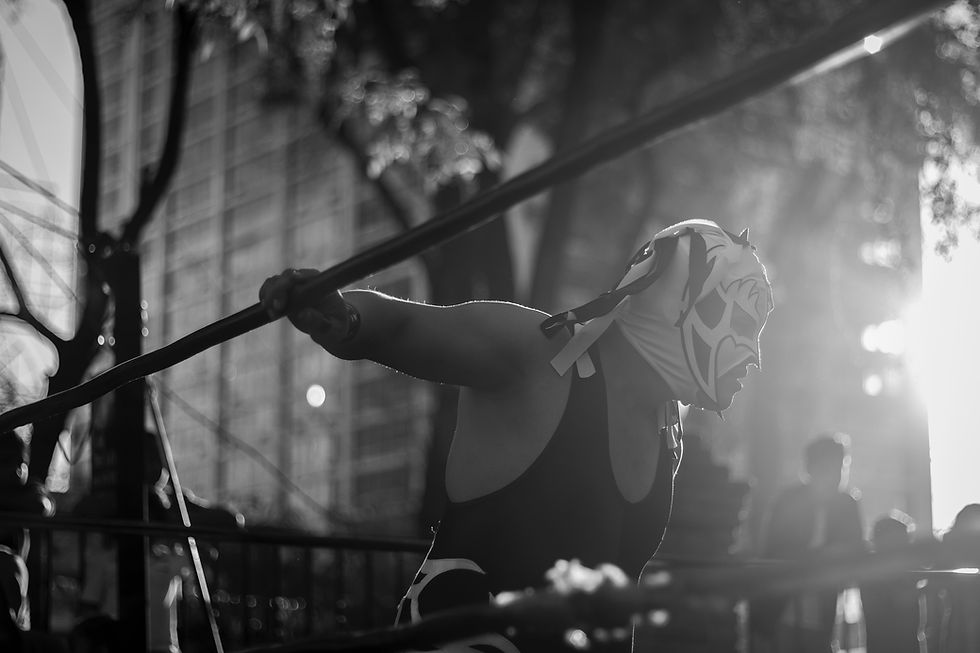
It was 2015, if I’m not mistaken; my son was watching a show on TV. Lately he was tuning in to a weekly show running every Monday night. He was so damn into it that I once sat down to watch it with him. Monday Night RAW, it said, then I remembered I used to know guys like Hulk Hogan and The Rock from these wrestling shows. It was World Wrestling Federation back then; they changed the F for E, which stands now for Entertainment. It is completely different people now; stories would be told and left hanging every end of the show, which would hook you up next week to follow up what had happened, just like a soap opera. And that’s how I ended up watching RAW every Monday night expecting to figure out what would happen with The Shield being disbanded, Seth Rollins turning heel, Sheamus, King Barret, Rusev and Alberto del Rio teaming up and forming the League of Nations, the Authority led by Triple H and Stephanie McMahon, the Wyatt Family, The New Day, somebody cashing in the Money in the Bank clause, The Undertaker vs. Brock Lesnar, and also subscribing to WWE Network and watching pay-per-view shows every month. 2016 started with our first Royal Rumble match that we all watched at some musician friends’ house, who happened to be wrestling die-hard fans too; that year it was Aj Styles debut and we were all so disappointed Triple H would win the rumble, but happy to witness the best Chris Jericho run ever. The rest is history, up to the point where I got my first wrestling gig as ring announcer, but we’ll get to that later.
I started catching up with past years of the WWE on the Internet and so much had been going on since the Hulk Hogan days, but it didn’t stop right there. A whole bunch of other wrestling promotions were out there putting out so much talent worldwide, such as Lucha Underground, Pro Wrestling Guerrilla — PWG — Concejo Mundial de la Lucha Libre — CMLL — Impact Wrestling, Triple A, Ring of Honor, New Japan Pro Wrestling, and I, or must I say, the whole family got very much into it.
I was getting into wrestling when I figured out how music, especially rock music, is related to the entertainment part of the sport. Every single wrestler, man or woman, local or foreign, mainstream or indie, would come out to a theme song. Their entrance goes along with the music, their attire, props, moves, etc. Music is essential to a wrestling show; a wrestler’s entrance may be even longer than the match itself; that’s how important the performance is to the show.
So the more I watched wrestling the more I analyzed what type of music each wrestler would use. WWE would normally create original music for their talent to use; this means they have a pool of music composers and producers, Jim Johnston being most popular, and currently a composing duo by the name of CFO$. However, some of the music comes from popular artist’s songs, used either partially or completely. Pay-per-view shows normally feature a popular artist song as the theme song, which is a good thing because their song is promoted on TV airtime. Shows on TV must watch for music copyright, of course. In indie promotions not on TV, each wrestler may pick their own theme song as long as there’s no copyright infringement. If the show is televised at some point, music with no copyright agreement is usually replaced or muted.
The relationship between wrestling and music got me into the sport even more. We were watching mostly New Japan Pro Wrestling. Although there’s no weekly TV show, and show production is not as elevated as WWE, I must say this promotion is on fire. We get to watch most of the best matches in the world, technically speaking, on the NJPW network. These guys get to tell us a whole story using nothing else than their own bodies. Alpha vs. Omega, Bullet Club on crisis over who’s in control, Kenny Omega reuniting with old buddy Kota Ibushi, Minoru Suzuki’s hair in a title match against Goto, Los Ingobernables de Japon led by Tetsuya Naito, Will Ospreay winning junior heavyweight championship, and so much more.
Peru is not the exception. Turns out we had a few friends in common who attended and even wrestled at local wrestling shows; there was a promotion called Leader Wrestling Association — LWA — which would put out wrestling shows in a local school yard. We would attend every single one of the shows, getting to know Peruvian wrestlers and catching up with the story lines of Ian Muhlig, Axl, TVK, Black Label, Killer & Seven, and the heavyweight champion at that time, Mansilla.
Talent from this promotion, along with others, joined forces under a new alliance called Imperio Lucha Libre, a young company that started doing wrestling shows by using big production and locations. The fact that their cards usually announced international talent was the hook for many wrestling fans who were only into WWE and not much into local wrestling. On the first show, we got the Hardy Boys — right before they returned to WWE later that year — the Lucha Brothers, Chavo Guerrero (former WWE and current Lucha Underground star), Carlito (former WWE Carlito Caribbean Cool), Zack Sabre Jr., Matt Sydal (former WWE’s Evan Bourne), Alberto el Patron (former WWE’s Alberto del Río) as big names in the upper card. Additionally came talent from all Latin America, such as Alessandro XL Saez, Ricky Marvin, Vicente Viloni, “the blonde eagle,” Zumbi from Brazil, and most of the Peruvian talent I mentioned earlier. This first show set a higher bar for every wrestling show from then on. Despite a few production errors and pretty delayed schedules, it was a great show. The company’s main idea was to film it entirely and edit it as different episodes for TV distribution, so they needed original music. Most of the international talent has a theme song to come out to, but this one had to be changed as long as the music they used was under copyright protection. Also consider that indie wrestlers are just that, independent; they are allowed to wrestle anywhere in the world, unlike WWE talent, which is under exclusive contract. The thing with indie talent is they usually portray a different character in every different promotion they work with, and music is a very important part of such character portraying; therefore, they’d rather not use their entrance music from other promotions somewhere else.
Executive producers approached my band so we could recommend some of our music for this purpose. This is how our song “Cambios” became Imperio Lucha Libre’s TV show’s main theme, and a few others accompanied some of the wrestlers to the ring. The company put out a few more shows during the rest of 2017 and early 2018 bringing more international talent, such as Paul London (former WWE), Marty Scurl (current NJPW & member of the Bullet Club), Austin Aries (former WWE), Ricochet (current NXT US Champion), Brian Cage (current Lucha Underground star), Psychoclown (Triple A — Mexico), and more. My family and I would attend every show. My son and his friends were always thrilled to be there.
It was after two or three shows they put out in 2017 that Imperio executives asked me to be ring announcer. I was thrilled, but I had to prepare. Although I had plenty of experience on stage and addressing crowds at a concert, announcing on a wrestling show was a different thing. First, the crowd is different from a music or rock fan. Second, the announcer’s job is basically to introduce everyone who comes out to the ring, so pronunciation and intonation were musts. Third, it was important to learn the wrestler’s or character’s information for a proper introduction. Plus, I had to know the match’s rules as they must also be announced. Of course, timing and sync with entrance music is essential. And last but not least, the announcer needs to know how to climb up and down the ring and not fall in the process. So after all the necessary preparation I was ready, and as far as I checked, I think I did a pretty good job, as these guys called me up again for their latest show earlier this year.
Imperio is on a bit of hiatus right now, and their wrestling talent is looking for new opportunities. It is now another local promotion, Generaxion Lucha Libre — GLL — that’s putting out new shows and creating interesting storylines involving a new stable called “This is Lucha,” formed by El Virrey Rafael de Salamanca (current GLL champion), Johan Stambuk (Colombia), Reptil, and Mansilla. This stable is using local band Blizzard Hunter’s “Heavy Metal to the Vein” as entrance music, so judging from their wrestling, character development, and music picks, they will definitely be a must-watch.
We have just had ALL IN, a new independent and available on-demand show put together by Nick and Matt Jackson, “The Young Bucks,” and Cody Rhodes, current NJPW talent. Later this year in October, Chris Jericho’s Rock N Wrestling Rager at Sea — a themed rock and wrestling cruise — is going down involving pretty much every non-WWE wrestling star there is, plus live podcasts, comedy shows and live concerts, which actually sound pretty awesome.
So, thanks to my son becoming a wrestling fan back in 2015, I was introduced to a whole new world of sports entertainment where I get to enjoy this strong connection with music, rock n’ roll, and stage performance. History of wrestling worldwide is quite an interesting thing to learn about too; it is amazing how many documentaries are out there that tell us about the people who started this back in the 50s — quite an amazing evolution throughout the years. What I love most about it is we get to enjoy all of it as a family, and it provides us with plenty of quality moments. Hats off to those athletes who put their bodies on the line every show to entertain us.
Claudia Maúrtua is a Peruvian singer-songwriter and guitarist. She’s the front woman of Lima-based rock band Ni Voz Ni Voto and a member of the female ensemble Cantautoras Peruanas. Follow her on Twitter @ClaudiaNvNv


