Music Review: American Idiot
by Mark McConville
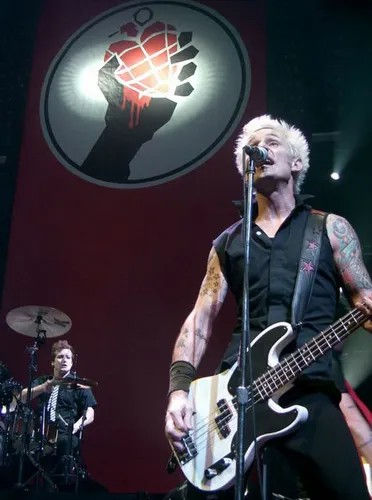
Green Day as a band were cascading into the void before they released their smash hit American Idiot in 2004. After its monumental surge, the band’s relevance was reinstated. Through time, many older fans turned their heads and started to rekindle their praise for a band that created a mediocre record four years prior. Warning damaged Green Day’s reputation. Although it did have its hits, it didn’t enforce the same aura as albums such as 1994’s Dookie, which in fact, brought Green Day to full prominence.
Circa 2003, Californian 3-piece Green Day entered the studio with ideas and concepts for an album which would rail against the grain of America’s heart. Without doubt, the act knew they had something special in their armory. Lead singer/lyricist Billie Joe Armstrong had written songs conveying his grievances towards his homeland, a set of tracks, blistering and somewhat sobering. He’d placed his heart and soul in these lyrics, storming around the studio, saying them out loud, searching for a place to rest his heavy head.
Ruin was also setting in. America ruled by George W. Bush had become a country in disarray. He wasn’t a poster boy or an acclaimed politician, as he created wars and struggle, and through it all, didn’t connect with the people of this powerful land. Armstrong, who in his own right, a famed musician, knew he had a project fueled by rage and power, which in time would be unveiled to the masses.
Record shops were still a port of call in 2004. Downloadable content was in its infancy. So when Green Day’s magnum opus fell, many flocked to purchase it. Excitement brewed, small revolutions were kick-started, and the slogan rage and love had become a tattooed feature. Billie Joe Armstrong, Mike Dirnt (bass) and Tre Cool (drums) commenced a revolt against a broken landscape.
With its surge, American Idiot as a political statement altered the punk scene. Yes, Green Day came under fire when they signed on the dotted line in 1994 and were revealed to the punk sector as major label recruits. Many disbanded, many raged against Green Day’s decision, but the band stuck to their guns and soared without looking back. Not only did it give the band more accessibility in terms of studio space and money, it elevated their brand.
Branding aside, American Idiot as a record, to many, is a masterpiece. A masterstroke in body and musicality. When it hit the music industry like a red alert, some fans who distanced themselves rallied to see what all fuss was about. After one listen to the showstopper single “American Idiot,” people almost subsided into the blitz of drama and delight. That single, which aimed its fire at political negligence and a certain president, had become a fixture in the minds of musical people and those who didn’t even listen to rock music.
American Idiot’s stance flourished. Although it was labeled as a raucous album, it was also comprised of subtle heart-pullers. Armstrong laced the record with delicate scores. These songs catered for soft ears, and soothed minds after fiery tracks, including 9-minute thriller “Jesus of Suburbia” and politically infused “Holiday.” The sentimental core included “Boulevard of Broken Dreams,” “We Are the Waiting” and “Wake Me Up When September Ends.”
Originality is fundamental, and Green Day knew they had to produce a masterclass. They did that and more. Musically, the rough and ready guitar lines offered abrasiveness. Instrumentally it clicked. Even though Armstrong isn’t the most technically gifted guitarist, he raised the bar here. “Jesus of Suburbia” showcases this fully.
Instrumentals are key. But American Idiot displays lyrical quality beyond any other album Green Day has released. Armstrong dictated the words here. He wrote with verve and intricacy, searching for solace as he scrawled in his notebook:
Everyone’s so full of shit
Born and raised by hypocrites
Hearts recycled but never saved
From the cradle to the grave
We are the kids of war and peace
From Anaheim to the Middle East
We are the stories and disciples of
The Jesus of suburbia
“Jesus of Suburbia” is 9 minutes long. A captivating inclusion and a song that binds the album together. We see inside the brain of Armstrong. It isn’t a political track, but one that explains the treacherousness of suburban America. St. Jimmy is the protagonist. He’s disenchanted but rebellious, looking for a revolution and love.
“Holiday” is a song where politics comes to the forefront. Armstrong sneers and lets the world know his protests. Throughout “Holiday,” we’re not found wanting. It is an infectious battle-cry for peace and unity:
Sieg Heil to the president gasman
Bombs away is your punishment
Pulverize the Eiffel towers
Who criticize your government
“Holiday” is controversial. There’s no doubting that. It triggers and presses down on hearts and minds. Armstrong knew through his lyrical wordplay, debate would come into play. The track would become a hit and it would be played freely by disenfranchised youth.
“St. Jimmy” is the most unruly track on American Idiot. Armstrong jeers and shouts. It’s rapid, it’s unapologetic, and it’s fierce:
The product of war and fear that we’ve been
victimized
I’m the patron saint of the denial
With an angel face and a taste for suicidal
This snarling contribution adds to the venom. It is one of those momentous songs which rails against the underbelly of America. Many critics also praised Green Day for putting “Holiday” into the frame.
To this day, American Idiot is played through modern devices. It is an album that is more relevant now than it was back in September 2004, cited as the last great concept album. An audacious claim definitely, but it is a work of art, a grandiose record, brimming with controversy and truth.
Mark McConville is a freelance music journalist from Scotland. His work has been published online and in print.


