Dissection
by Rebecca Tiger
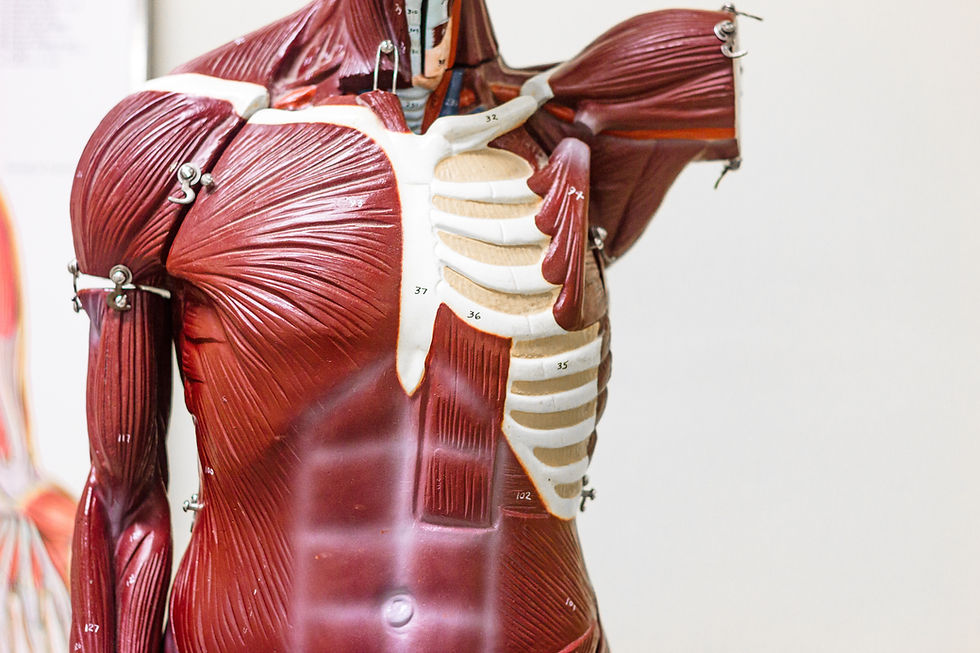
Frogs have delicate bones protected by a fragile vertebra. We dissect them in biology class because when you cut horizontally down the front, you can see their whole insides easily. They resemble humans enough, with a heart, and other organs, so this early exercise in examining a creature’s insides is meant to allow us to see it all easily and perhaps to incite our imaginations about the inner workings of other creatures. Other things.
When I was young, my biology teacher lost patience: The creature lying in front of me, dead, dainty limbs splayed, was so dead that I could do nothing but run from it, scalpel in hand, after she reminded me “it’s not alive” and nothing to be afraid of. It wasn’t death. It was destruction that scared me. There was something grotesque about cutting into a perfect creature, to mar its body for curiosity. Or more precisely, for an assignment.
My mother died in the early hours of the morning. The 24-hour hospice line didn’t answer for two hours. Then the cremation company’s van broke down. I sat with her for over five hours as her body yellowed, turned cool to the touch, stiffened, as her blood pooled on her backside. I learned about the four stages of mortis: pallor, algor, rigor, and livor. I touched her body, looked closely at her glassy eyes, lifted her delicate hands, her nails still had the polish from the recent manicure I gave her, “Mind-full Meditation” by Essie. Her favorite color now, a pale pink. “You can paint them red, next summer,” she said. She died in November.
I got an F on that assignment because I refused to cut into a creature whose life was given for my education. I learned far more about the body later, the spread of cancer, the shutting down of organs, the order in which the body starts to fail, first the digestive system, then slowly the brain, my mother’s lungs gasping for air, three times per minute near the end. Each gurgling inhale through her open mouth felt like the end. I would wait for the next one, timing it, counting like I had learned, one Mississippi, two Mississippi, until I heard a sharp exhale. Her teeth turned brown from the discharge her failing organs emitted; I would wipe it off the corner of her mouth, but it accumulated much faster than I could handle, pooling on the white pillowcase her head rested on.
My father said it was okay I wasn’t doing well in biology. “Girls aren’t good at science,” he declared. I assume my brothers cut into frogs, maybe pigs later, and certainly the brother who went to medical school cut into a human body though his specialty, psychiatry, would require a different kind of dissection. My smart brothers weren’t there when my mother died. The men in my family were too bothered by her dementia, too rattled by her wasting body, to be curious, as I finally was.
Rebecca Tiger teaches at Middlebury College and in jails in Vermont and lives part-time in New York City. Her stories have appeared in Bending Genres, BULL, JMWW, MER, Peatsmoke, Roi Faineant, Tiny Molecules and elsewhere.


