And in the Goat-Skins: Autobiographical Notes in Six Identical Questions
by Andrea Lewis
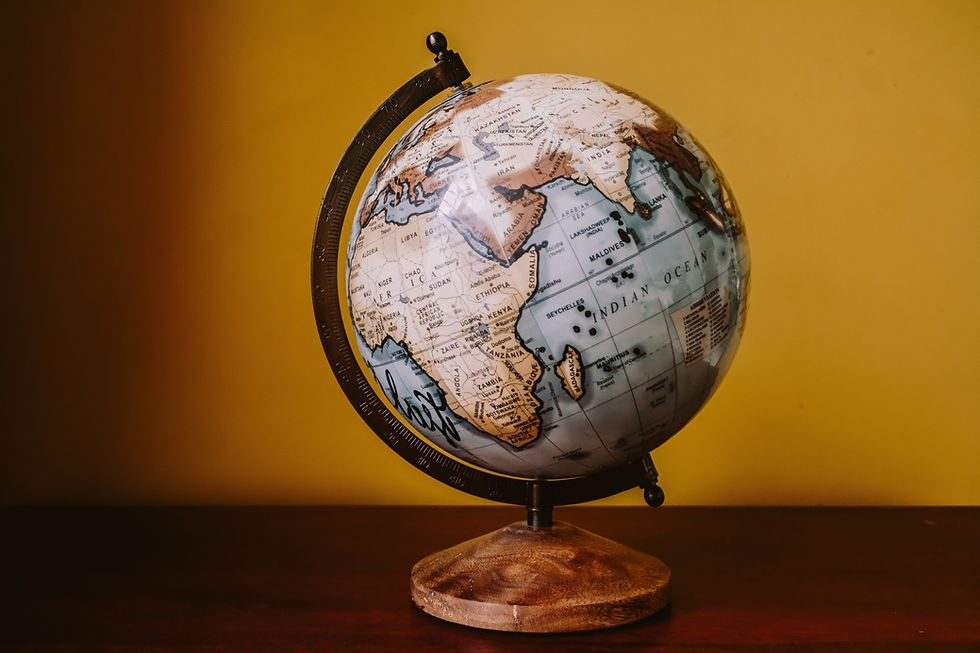
“…but this is a sea that patiently recreates for us scenes from the past, breathing new life into them…”
— Fernand Braudel
Memory and the Mediterranean
1. Where do you come from?
I come from Lansdale, Pennsylvania, where I was born during a thunderstorm on a July night while my father was in Tripoli, Libya, at a U.S. Air Force base called Wheelus. I always loved the word Tripoli — derived from the Greek and Italian for three cities — and felt, from my earliest days, that it linked me somehow to the Mediterranean Sea. Once, on a visit to Italy, I stayed for a week at a villa with views of the Sea and sounds of the wind in the Italian pines. I loved imagining that the winds had swept across the Mediterranean from North Africa. In Michael Ondaatje’s The English Patient, Count Almásy lists the melodic Arabic names for African winds: aajej, imbat, ghibli, simoom.
2. Where do you come from?
I come from Fort Bragg, North Carolina, a military base where we lived when I was two years old and where a snapshot of me on the steps of our barracks, wearing red corduroy overalls and holding a cardboard packet of Easter egg dye, almost constitutes my earliest memory. Probably I just remember the photo. However, sixty years later, when my older sister learned she had a few weeks to live, we started retracing our past. I asked her, “What is the earliest thing you remember?” Immediately she said, “Fort Bragg.” One terrifying night, the barracks next to ours burned to the ground. My sister never forgot the ring of Military Police standing guard the next day over the charred remains of the building.

3. Where do you come from?
I come from the Wherry Housing Project on Kirtland Air Force Base in Albuquerque, New Mexico, where we ended up in 1952 when I was almost four years old. Here is the site of my real first memory, inside the boxy house on the brown lawn on Perimeter Drive. From my highchair I can see a wedge of sunlight illuminating a flowered sofa, but my gaze rests on our stainless-steel waffle iron. My dad is making waffles. He was always doing something interesting in the kitchen: making waffles, starting a batch of clam chowder by cutting up raw bacon with a pair of black-handled scissors, making chocolate eclairs, or brewing root beer. He bottled his own root beer, using a hand-operated bottle-cap press to seal in the carbonation.
4. Where do you come from?
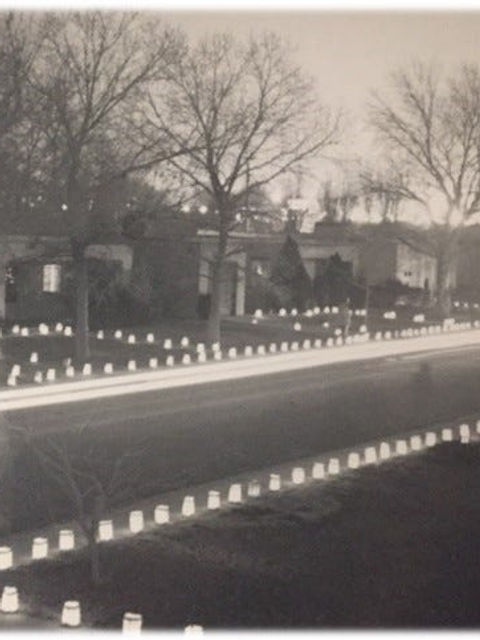
Albuquerque. I grew up there after my parents decided to stay. They bought a flat-roof stucco house in a newly carved-out neighborhood and lived there for the next sixty years. Dutch elms, cicadas, zinnias, sprinklers, sparklers, moonrises. Blue venetian blinds sucked against the screen before a thunderstorm. Luminarias at Christmas. Walking to Zia Elementary, walking to Jefferson Junior High, walking to Highland High School in the freezing winter wind with a scarf on my head and a loose-leaf binder clutched to my chest. To the east, the Sandia Mountains, pink in the sunset. To the west, a flat-line horizon blipped with far-off cinder-cone volcanoes.
5. Where do you come from?
I come from Seattle, Washington, where I have lived since 1979 and where I have studied writing for many years. In an early fiction class, I turned in my first completed short story, titled “Mediterranean.” In it, a nerdy guy falls for a glamourous, flighty neighbor even though he’s pledged to marry his sensible girlfriend. The sensible girlfriend wears flowered dresses, makes waffles, and teaches kindergarten. The glamour-girl wears miniskirts and stilettos, dates a drug dealer, and gets in and out of sports cars. The story is set in Albuquerque. The Mediterranean Sea appears only in daydreams: the guy imagines trysts with glamour-girl in a sun-drenched villa above the Sea. I was striving mightily for some metaphor about the nerdy guy finding the middle ground (medi-terra) in life. My own unresolved dilemmas from youth — seeking the medi-terra between glamour and sensibility — were, I suspect, at the unconscious heart of it. After tortured rounds of rewriting, nervous as hell, I presented a draft of “Mediterranean” to my teacher. She returned it with the note, “This has no plot.”
6. Where do you come from?
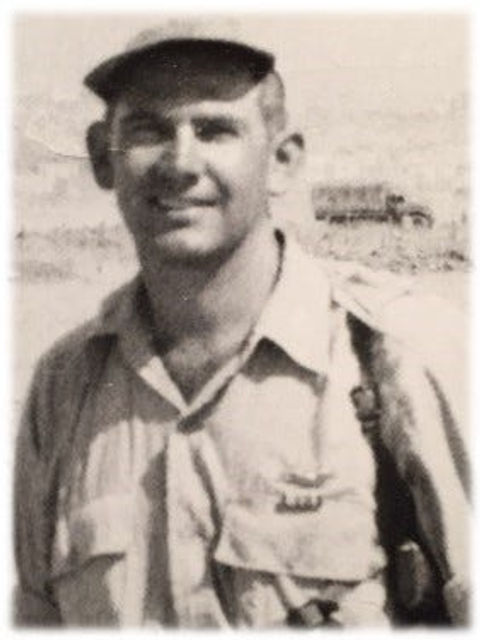
My mother did her best, but I always felt like I came from my father. He was a B-25 pilot in WWII and, in 1943, flew fifty bombing missions over North Africa from an airbase called Medenine near the Mediterranean coast of Tunisia. Twice, he and his crew ran out of fuel on night missions and parachuted out before the plane crashed. He told of these adventures in long typewritten, tissue-paper letters to his parents. He described bailing out at 7,000 feet and watching the plane circle back to almost hit him. He described the crew’s rescue by “Arabs” (maybe Bedouin or Berber tribesmen) who shared their food and water and led the crew on a three-day walk back to their “airdrome.” They havea marvelous sense of direction, he wrote, walking a perfectly straight line in the open desert with no landmarks or compass to guide them.
After the crash landing of “Mediterranean,” I was lost, doubting my writing future. But I kept at it, and the stories improved. I found a medi-terra where my love of words, sentences, and even plots came together.
I treasure the stash of letters my father wrote from North Africa. I admire his writing style, its lovely declarative sentences and fine details: The Arabs treated us very well. After drinking a lot of water, we ate dates, goat’s milk, boiled eggs, and something like cracked corn cooked with peppers. I felt selfish drinking so much water because they had to carry it so far, and in the goat-skins.
Andrea Lewis writes short stories, flash fiction, and creative nonfiction from her home in Seattle, Washington. Her work has appeared in many literary journals, including Prairie Schooner, Catamaran Literary Reader, and Raleigh Review. Her collection of linked stories, What My Last Man Did, won the Blue Light Books Prize and was published by Indiana University Press.


