What's Your Literary Bear?
by Amy Cipolla Barnes
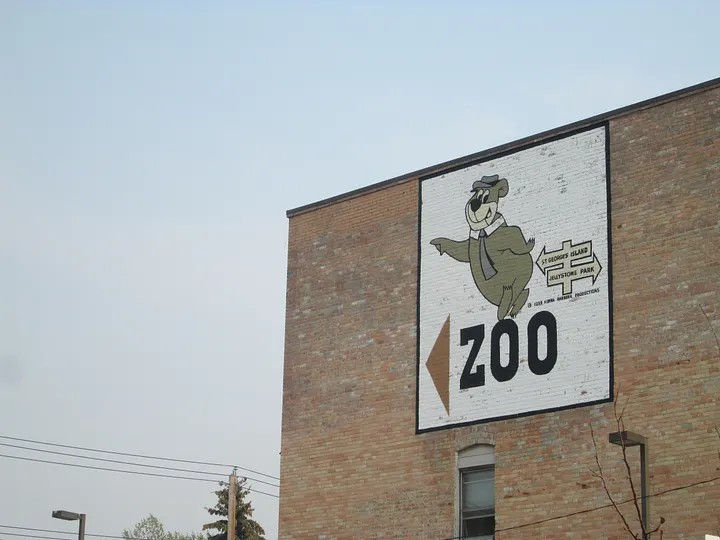
Sad, emaciated bears in dry pools on an artificial ski mountain. Dancing bears in a Florida flea market. Scraggly bears in a nearly-closed roadside zoo. Bears in top hats on theme park stage that closed a few weeks later. A news story about the last Romanian restaurant bears freed from captivity.
Why am I thinking about sad bears when I’m trying to write? I find myself drifting into each memory — analyzing the why, how and who. Why are the bears in those settings? Who put them there? Why didn’t I try to free them like someone might release lab rats or frogs in protest? What were the bears thinking? What was happening in my life at each one of those moments? Were they captured in some kind of King Kong conquest? Did they once enter houses and steal porridge?
I’ve thought about it and my memory bears are simply things that link as creative prompts, that become objects in my writing. Sometimes, it’s flowers. Or roller skates. Or maps. Right now, it’s bears. There’s something fairy tale-esque about them. Campground-threatening. The “only you can prevent forest fires” figure.
Just because I’m contemplating bears doesn’t mean I’m going to write about bears. They often become other characters and objects. I look at their settings as potential backdrops. I feel empathy for their lives. While I’ve only written about bears a few times, the grouping of bear memories becomes the proverbial bare bear base for human characters too. It’s my version of mind mapping, with bears.
As you set out to write in a new year, I encourage you to find your “bear” memories — whatever they are. Go to your memory base and map there or on paper. Write down the linked memories you can’t escape from. Write about literal bears. Write about stuffed bears. Write about the trip you took to see the bears. And then, look for the story in those mapped memories.
Some tips as you remember and write:
Don’t exploit the bears.
Do find new characters and settings and plot lines.
Do let the memories speak to you.
Write down the back story of your bears.
Focus on sensory details. What resonated?
Write a letter to the bears. Apologize. Tell them you love them.
Interview your bears. Ask the questions.
Anthropomorphize.
Bear into fairy tales and nursery rhymes.
I went looking for literary bears and found I’m not the only one writing and thinking about real bears either. For further inspiration, check out these stories that explore bears in a variety of ways.
“Bear” by Ben Loory
“Interview with a Bear” by Elizabeth Loudon
“The Bear” by Don Tassone
“Bear” by Ulrica Hume
“Competition” by Allison Symes
“Bear Walks Into a Bar” by Kathy Fish
“Another Bear Story” by Lorna Crozier
“Lost Boy Found in his Bear Suit” by Patrick Smart
“Brilliant Silence” by Spencer Holst