The Gravity of Habit
- Mar 23, 2018
- 3 min read
by Saige Cross
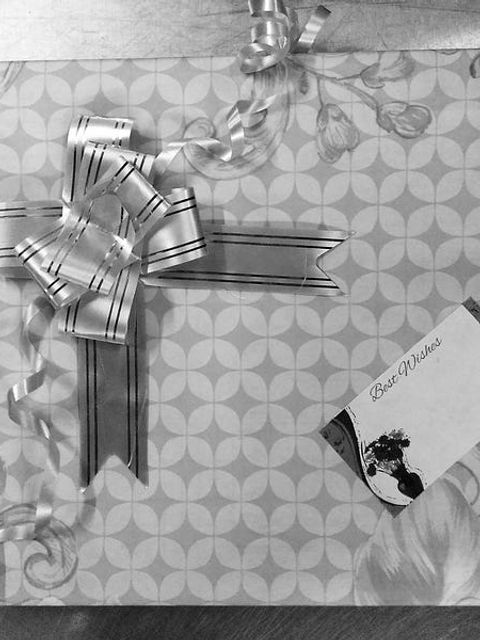
The box was on the porch again; same red ribbon, same blue paper. I told Elle to open it, like she had opened all the others. We save the paper as best as we can. She’d carefully remove the tape and dismantle every fold, straighten every crease. The things we’ve done with the paper:
1. New wallpaper for the kitchen bathroom
2. Liner for the silverware drawer
3. Framed the smoothest pieces for display in the foyer
4. Gift wrap for Samantha’s baby shower (they were having a boy, luckily)
5. Add to our paper supply for our newfound origami obsession
6. Napkins, for when we run out and don’t want to drive into town for more
7. Short fuel for the fireplace
The ribbons we’ve saved for:
1. When the curtain draw cords snap
2. When our shoelaces fray and can no longer be tied
3. When the floss runs out and we don’t want to drive into town for more
4. When Daniel falls out on the school playground and needs an arm sling
5. When Melissa’s scarves are all in the wash in the wintertime
6. When the fence posts break
We didn’t know what to do with the boxes. The kids tried to play in them, but they’re too small; their little bodies burst the seams. Unfold them to make them plates, and the food bleeds right through onto the gift-wrap tablecloth, turning it green/blue/red. They’re too small for laundry baskets, too.
I spent weeks driving around the county, trying to find someone driving away from our home who looked suspicious. I’d bring log books and mark an ‘X’ off on parts of the countryside that I’d already scoured. It took thousands of extra miles on my Tacoma to realize that they really didn’t want to be found. At first, I was angry. I gathered the boxes, and with a bottle of lighter fluid, sent a message that could been seen across the county. The next morning, I found another on the porch. So I forced myself to see them differently.
A few years back, Daniel asked if we’d ever find something inside one of them. When I asked him what he meant, he said that they were all empty. He wondered why someone would do such a thing; he called it cruel— to raise our hopes for nothing. I’d gesture to the gift:
“What do you see?” I asked.
“Nothing. Nothing,” he’d say.
Nothing is a funny word. It was the word he’d spout out mindlessly after I’d ask him what he did at school that day. It was the word he’d use when I’d ask what he was thinking. His sister would come screaming to Melissa and me, claiming he hit her. I’d ask him what he did.
Nothing.
Nothing is always something.
Now, nothing is a boxed fort of over a thousand boxes that stretches from floor to ceiling in the new storage building we have behind the home. Nothing is home to three dragons; two princesses; the whole Milky Way Galaxy; a robot fleet; and a moat that can “swallow all of China and more.”
Last week, when we ran family inventory, we were at 1,563 boxes total. That’s two boxes a week for fifteen years now. They’re a part of Daniel and Elle’s childhood. We expect them like we expect the seasons. When one is left on the porch, the kids sprint into the living room and sit down on the couch, the gift on the coffee table in front of us.
“Elle,” I say, “do the honors, baby.”
She says her favorite word, “gotcha,” and proceeds to open it.
As the ribbon unfurls, and the wrapping paper is set aside, revealing the white borders of the lid on top of the box, I can’t help but think of what will happen when I meet the man leaving them. He will stride in, like a character from ancient folklore, and we’ll welcome him in our home as such. He’ll marvel at the décor; every ounce of it, his doing. He will wear large steel-toed boots and a great black hat, and walk around pointing his fingers, cursing what we’ve built. And the children will grab him by the hand, their kindness dissolving him, and escort him around the property, their path tracing the edge of the fence, fastened together by hundreds of yards of red ribbon. They will take him to the storage building, their smiles burning holes in his calloused heart, chanting, “look and see! look and see!” and they will open the door. Inside, a monument. Not merely of boxes, but of choices.
And as the great white light washes over every wrinkle, dip, and curve of his face, the man will understand the gravity of habit.
Saige Cross is a writer living in Oklahoma City with his wife and pug.