Terzetto in the Dark
- Oct 29, 2021
- 2 min read
by Jack Barker-Clark

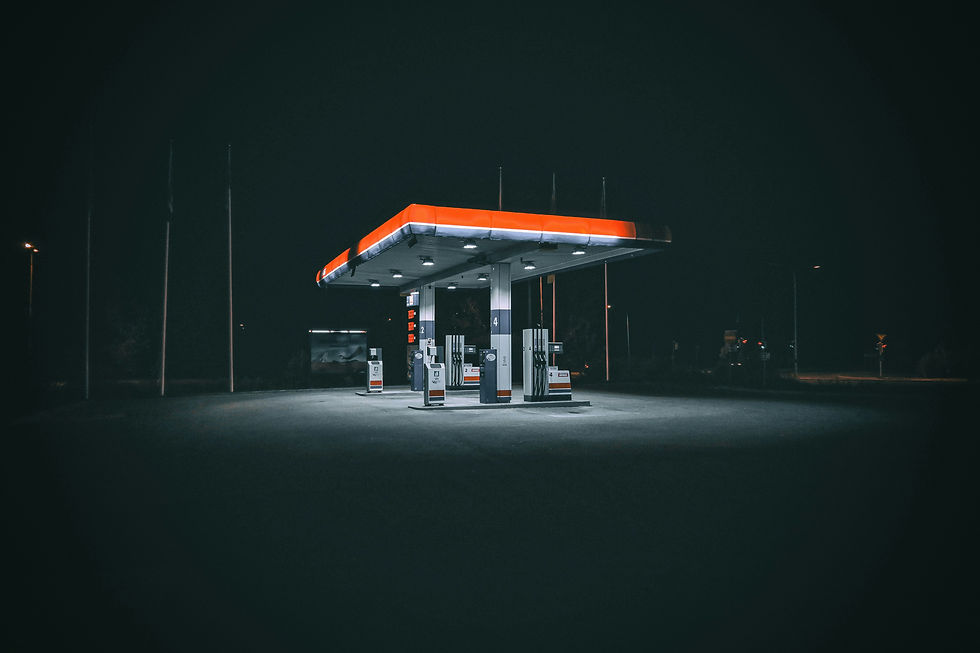
Soon we were rained on, a light drizzle of chamber music. We flickered in the moonlit petrol station, the ambient forecourt with the ring of poplars, the moonlight and neon, a wagon playing Dvořák, while drivers pumped unleaded, the emotionally ravishing music surging out through the darkness.
It was spring. The endless neon light smashed against the trees while Thom’s low-slung head disappeared and reappeared from between the pumps and bonnets, drunk and howling and mechanized. The petrol station workers were anxious, frightened. Thom’s sobbing lifted up and over their plexiglass — was large, aggrieved, moist, fraught, imploring, desperate. An ambulance was called.
Thom was rolled onto a stretcher, sifted like sand. He folded into himself on the canvas, a dying star, two hours before his stomach was pumped, and his dad set to raving in the midnight garden. We were fifteen and had our whole summer ahead of us: of paranoia and investigatory phone calls and vitriol.
A second attendant, nimbler, a zealous face, billowing, came out to shake my hand, I’d done the right thing, in bringing Thom down from the fields, the abandoned lido, getting help. While the paramedics toiled over my friend in the ambulance. How much to drink? they kept saying, how much? Until his dad’s chic sedan shrieked across the tarmac.
Now and then I put together the evening I had always dreamt of, recounted, but all I could think of was that Dvorák, screaming out of the parked wagon. And the poplars and the stillness of the night, once the ambulance took my classmate away and his dad weaved in and out of potholes down after them, in staggering pursuit of his damaged boy.
Eventually there was silence. The poplars were still, unmoving, a windless night. But one had disobeyed: caught in movement, swooning on updrafts, its topmost branches glittering. I hadn’t seen many heads thrown back in ecstasy but recognised it now, little wooden throat, exposed, fixed in its quiet glee.
Nobody had asked me to reconstruct that night but every noon my head went swimming. On the page, I paragraphed and reparagraphed, digging at the panic, at the guilt of having put up the vodka, the shame. But other things were less pronounced, even missing, deleted: the attendants’ faces, the paramedics’ guile, our friendship all spring, destroyed in the aftermath.
For I had surrendered to Thom’s dad, the schedule and the poisons, and those minutes at the lido, with the vodka and the broken bottle, the pact on the grass. How we lurched across the road to the lights, the cars that swerved. I could never remember which Dvořák had come out of the wagon: the terzetto or the ballade. Whose hands were bloody. It was like that in our town. We were all the better for our myopia.
Jack Barker-Clark is a writer from the North of England. His fiction has appeared in several US and UK journals. He is the winner of the Fish Publishing Flash Fiction Prize 2021. A portfolio of his work can be found at jackbarker-clark.co.uk