Mother’s Keeper
- Jan 14, 2022
- 4 min read
by Vincent Anioke
For the first ten thousand nights, you and Ma sit beneath the leaves of her oldest trees, and she tells you how it was in The Beginning. More colors than there were stars, and more winged beasts than there were colors, and gardens, resplendent homes to these multiplicities, except for swaths where Pishon cut through, that river burnished with brightest gold. Although, and her voice lowers conspiratorially at this part, I favored Euphrates for my long baths. Because he did. In The Beginning, we were inseparable.
It is hard to imagine, this immortal age where her smile lingered into dawn, a time before you. You crack various-sized bones in half, passing her the bigger pieces. Unformed, yes, you were, she remarks between bites, but always with me. She pauses when Pa and your brother saunter past, muffled in their own chuckle-filled conversation, neither casting a glance your way. Even when they disappear into the shadow of their cave, Ma’s tongue doesn’t unfurl. She retreats to sleep on a bed of grass.
For the first ten thousand days, you and Pa till rocky grounds. He pauses every so often to curse her name and palm-wipe forehead sweat and scratch at the purple scar on the left side of his ribcage, an arm-length indentation half-obscured by a velvety fig leaf.
Used to be whole, he grumbles as he scratches. Used to pass the days in peace. Unclothed. Unburdened. You know the aim of his distaste, know she feels the barbs even in the solitude of her fields, her hours spent grounding roots that bloom into towering sycamores.
At midday, your brother visits from the other end, from downhill. His arms are filled with flanks of juicy meat, his flock’s second-born, their skins fire-warmed. He shares the spoils with Pa, a cross-legged communion on a glassy stream’s edge. From where you watch, your belly rumbling, you realize how tall your younger brother has grown, taller than you, and how much his face resembles Pa’s. You know this is your greatest failing, in Pa’s estimation, how your eyes are Ma’s, your rounded jaw, your soft gait.
Pa and your brother leave the picked-clean bones in a heap. Come sunset, you are next to Ma again, each bone snapped in unequal parts. Ma always hesitates before accepting the larger portions. Her doubtful glaze vanishes when she sucks marrow from cartilage, rejuvenates her body with nutrients enough to say, you and he were ordained as my punishment. Did you know? She knows you do. You lean in closer, nestle your head on her chest, listen to its rumble as she speaks. I was to claw my skin red and screech to the skies birthing my boys, but I saw tiny lips and eyes that beheld mine and seed-sized fingers clawing at air. Such love, such effortless bliss.
One afternoon, Pa is unwell. This, too, he blames on Ma, how his own flesh can turn on him. At your request, your brother reluctantly joins you on the tilling grounds. You tell him Ma’s stories. He grunts in response. You beg him to join the both of you one of these nights. She will dance a thousand years if you grant her this mercy. He laughs, a sound so like Pa’s, unkind, deep-belly loud. And you think of how demure Ma’s voice is, even at her most excitable. One of these days, your brother says, the wind will lift forever-frail Ma so high above the clouds that she will almost graze the locked gates, almost glimpse the flaming-sword cherubim, but only almost.
Pa partook in the fall, too, you remind your brother.
He drops his pickaxe, one of two Ma fashioned from stone many moons ago. He sneers.
Because of the one-boned jezebel, he says. But no matter; Pa rules over her each night, as is his right.Soon, I will too. And it is many things: the casually cruel longing; the downturned timbre on the word her, as if what he really means to say is it; how he carries Pa’s manner in his mannerisms, enough that you now understand why Ma’s words vanish — not on sighting Pa, but on sighting him, this son she bore in an explosion of red limbs and ululating teeth, this man she carries in the scars that don’t show on the sides of ribcages, tethers to a hope that wrinkles her skin with its futility, fulfills the childbearing curse of the fall.
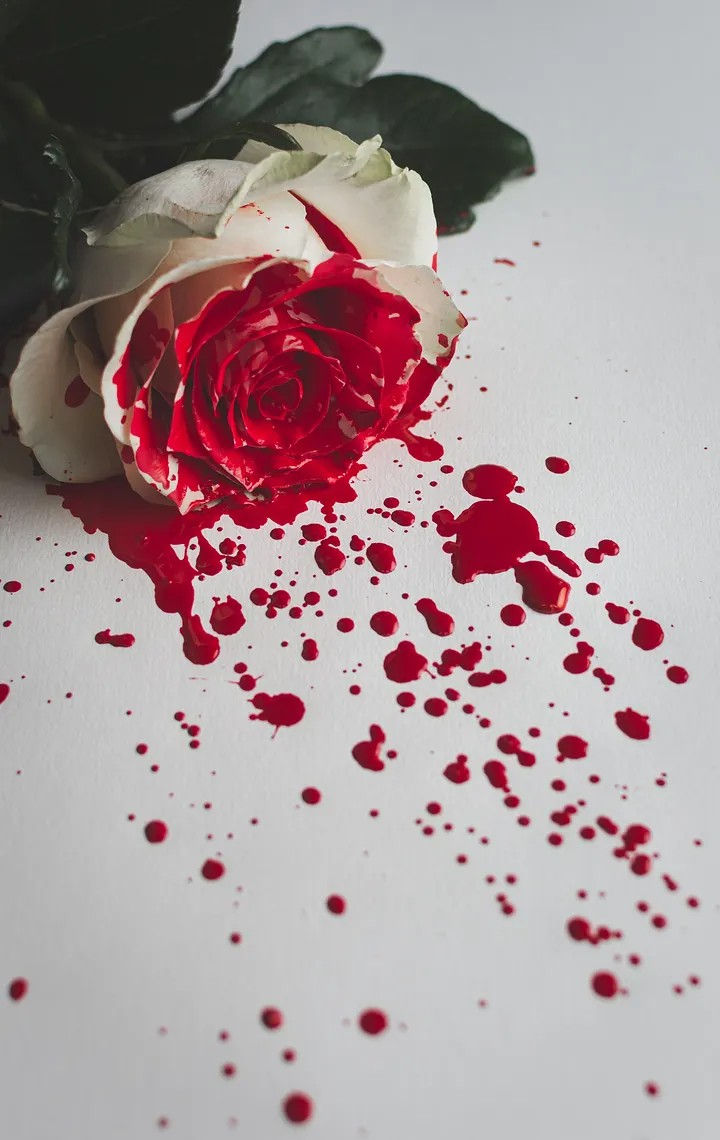
So you raise your pickaxe, this cold and bent tool that didn’t exist in the swim-heavy days before you, before the bite of fruit, before the knowledge that love could be cruel and terrifying and oh-so-consuming, and you burrow it into his chest, knowing somehow that it will cut him off mid-sentence, bestow on him Ma’s silence, bloom a crater that shows bone, the kind you could never offer her. He crumples and stills and dark-liquid water pools at your feet.
You sit beside your brother, waiting for him to rise until you understand that he never will. Then your only thought is for Ma. Even though a part of you worries that she will break, you hope she finds salvation in what has happened. After all, she has never been undone by the color red.
Vincent Anioke was born and raised in Nigeria but now lives in Canada. His short stories have appeared in Split Lip Magazine, Carve, Pithead Chapel, and Bending Genres, among others. He is the 2021 Austin Clarke Fiction Prize Winner and was also shortlisted for the 2021 Commonwealth Short Story Prize. Find him on Twitter at @AniokeVincent.